
NEWYou can now listen to Fox News articles!
A hacker working for the Sinaloa cartel identified an FBI assistant legal attaché in Mexico City. According to Reuters covering a Justice Department inspector general report released in June 2025, the hacker used the official’s phone number to obtain call records and location data. The hacker then used Mexico City’s camera network to follow the official around the capital and identify the people they met. The report says the cartel used that information to intimidate potential sources and cooperating witnesses and, in some cases, to kill them.
The deadly lesson was clear: our adversaries no longer need to physically surveil their targets. The commercial data economy does much of the work for them.
In an updated audit released last week, the Department of Justice (DOJ) Inspector General highlighted that this threat — ubiquitous technical surveillance or UTS — “continue[s] to affect the Department” and determined that “DOJ had no common definition of UTS and was not otherwise well-coordinated on the issue, few of the Department’s components had taken action to mitigate the UTS threat, and UTS-specific training was lacking.”
FBI INVESTIGATES AFTER SHINYHUNTERS HACKERS CLAIM THEFT OF AGENTS’ PERSONAL DATA
The conclusion should concern every Homeland Security and law enforcement official: “deficiencies identified in this audit place the Department and its employees, investigations, operations, sources, and witnesses at increased risk to UTS threats.”
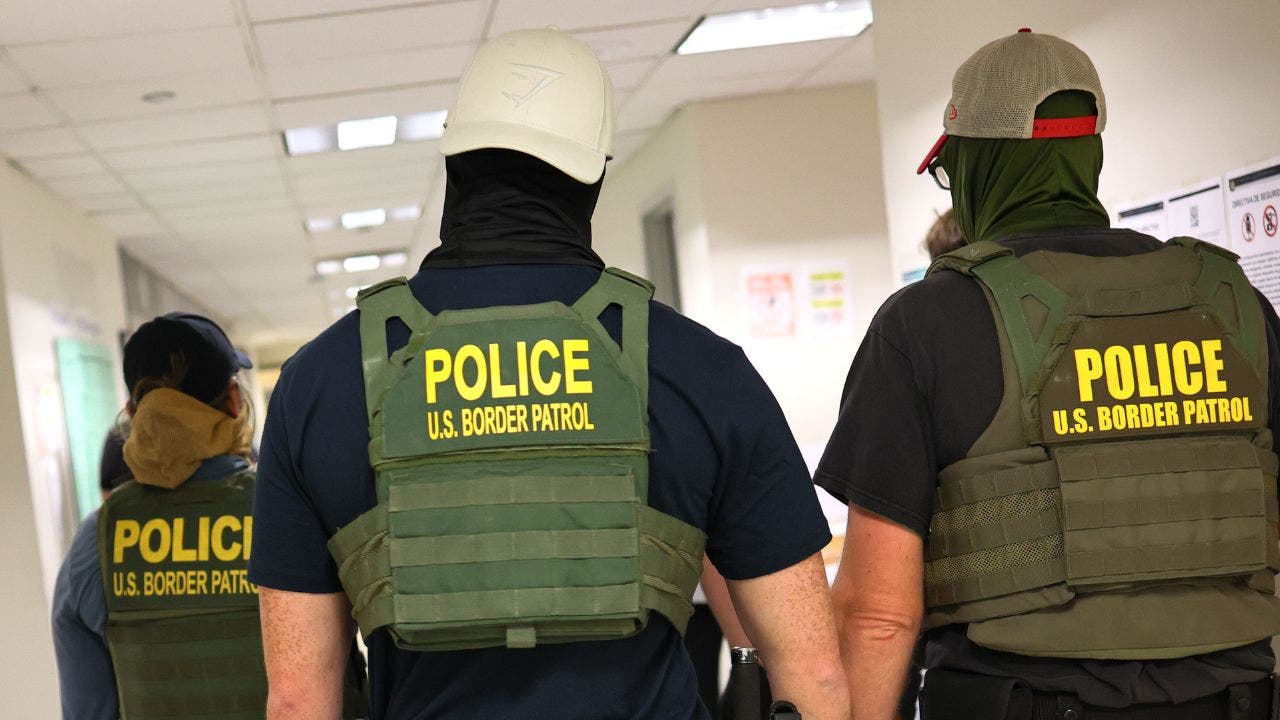
Border Patrol agents have been wearing masks or neck coverings to conceal their identity while performing patrols or conducting raids. (Michael M. Santiago/Getty Images)
As a federal law enforcement and Homeland Security official for the past 25 years, I have seen how quickly technology can change the threat environment facing our personnel. The proliferation of inexpensive, commercially available information creates an unacceptable risk that requires a comprehensive solution.
As the acting director for Immigration and Customs Enforcement, I saw these threats firsthand. My family and I know the dangers too well.
EXCLUSIVE: LA ICE DIRECTOR REVEALS OFFICERS FOLLOWED HOME, HARASSED AS POLICE FAIL TO HELP IN SANCTUARY CITY
In October 2025, for example, the Department of Homeland Security (DHS) reported that cartels had put bounties on ICE and Customs and Border Protection officers in Chicago. The reported figures were $2,000 for doxxing or gathering intelligence on agents and as much as $50,000 for killing high-ranking officials.
Especially for officers working cartel cases, the risk can follow them home.
THE SURVEILLANCE CAMERA ON YOUR STREET CORNER: LAWFUL SPYING OR CONSTITUTIONALLY PROBLEMATIC?
Consider a task-force officer who raids a cartel stash house in the morning and drives home that evening to the same community where the arrest occurred. The officer’s children attend school there. The family goes to church there. The officer coaches a youth sports team there on Saturdays.
Individually, those pieces may appear insignificant. Combined, they can reconstruct a person’s life. And that creates a new vulnerability for federal law enforcement.
FIVE DATA BROKER OPT-OUT MYTHS THAT LEAVE RETIREES EXPOSED
This is what the commercial data economy can expose. What has changed is how little an adversary has to steal. Duke University researchers bought sensitive records on U.S. military personnel for as little as 12 cents each, including names and home addresses. Separately, a WIRED investigation used commercial location data to trace devices associated with U.S. military sites in Germany to homes and schools for military children.
Fortunately, we know how to begin defending against this. During the Global War on Terrorism, we got very good at using data to find people and map their networks. We need to turn that expertise into better protecting our own personnel.
DRUG CARTEL KINGPIN AMONG TARGETS IN SWEEPING TRUMP CRACKDOWN ON ALLEGED MEXICAN CORRUPTION NETWORK
Agents should have a program that checks what an adversary can already see about them. Agencies should help remove their addresses from broker sites where possible, help their families lock down their accounts, and provide a clear way to report threats involving their names or personal information. That protection should be part of the job, with resources and accountability behind it.
In October 2025, for example, the Department of Homeland Security (DHS) reported that cartels had put bounties on ICE and Customs and Border Protection officers in Chicago. The reported figures were $2,000 for doxxing or gathering intelligence on agents and as much as $50,000 for killing high-ranking officials.
The administration has designated six Mexican cartels as foreign terrorist organizations, and DHS leadership has publicly described threats to its officers. Protecting the workforce from cartel surveillance follows from that, and it doesn’t need to wait.
WATCH: DHS ISSUES STARK WARNING AFTER 300 ‘HOSTILE’ CARTEL DRONES DETECTED AT SOUTHERN BORDER
Put one senior official in charge.
Start with the people at greatest risk: the task forces working cartel cases, our attachés overseas and the details protecting our leaders. Find out what an adversary can see about them. Then use those findings to help families reduce their exposure, and train agents to assume they are visible and work accordingly.
CLICK HERE FOR MORE FOX NEWS OPINION
Congress should provide clear authority and sustained funding for that protection.
The Mexico City case shows what can happen when surveillance exposes the people around an American official. Addresses, location histories and family profiles can reveal the routines of an entire household, putting the people closest to that agent at risk. We must not wait for another tragedy before acting. We have to plug these data leaks now to protect agents and their families.