Ex-NFL player Jack Brewer leads charge to end fines for players using religous, political eyeblack messaging

Former NFL player Jack Brewer met with officials from the U.S. Equal Employment Opportunity Commission in Washington, D.C., on Tuesday as he seeks federal scrutiny of the league’s decision to fine Arizona Cardinals cornerback Kei’Trel Clark for displaying a religious message on his eye black.
Clark was fined $6,651 after wearing eye black bearing the message “Glory Be 2 God” during Arizona’s Week 1 victory over the Los Angeles Chargers.
Brewer, an ordained Christian minister and member of the federal Commission on the Social Status of Black Men and Boys, told OutKick that his meeting was intended to determine whether the NFL’s treatment of Clark could raise an employment-discrimination issue.
DOJ CRACKING DOWN ON MLB FOR POTENTIAL RELIGIOUS DISCRIMINATION AFTER PRIDE NIGHT CAPS CONTROVERSY
Kei’Trel Clark #13 of the Arizona Cardinals celebrates during the first half of an NFL game against the Tennessee Titans at State Farm Stadium in Glendale, Ariz., on Oct. 5, 2025. (Getty Images)
“When you start talking about freedom of speech in this country and you start talking about employees’ rights in this country, it’s a big deal,” Brewer said. “As a Christian man, I’m not going to stand for that. And as a former NFL player, I’m not going to stand for that.”
Brewer said the meeting was “very well received” and left him confident that further conversations with the agency would take place.
“The goal was to first understand: Do we have a potential case? What does that look like? What would the player’s rights be?” Brewer said. “My goal was just to establish some communication and talk about next steps, which we did. And so now we’ll start to work to gather information and get a deeper understanding of really what goes on in the minds of a league like the National Football League.”
Brewer initially raised the issue in a Sept. 25 letter to EEOC Chair Andrea Lucas, requesting a meeting about the fine and the league’s policies governing religious expression.
“The NFL treated Clark’s gratitude to God, as expressed in four words, as a punishable personal message,” Brewer wrote in the letter obtained by OutKick. “This fine represents an action that strikes at the heart of religious liberty and sends a chilling message to every person of faith in professional sports.”
Brewer asked the EEOC to consider whether the NFL would be required to accommodate a player’s sincere religious expression when doing so would not impose an undue hardship on the league or its teams.
Title VII of the Civil Rights Act requires covered employers to reasonably accommodate employees’ sincerely held religious beliefs and practices unless an accommodation would impose an undue hardship on the employer’s business. In its 2023 decision in Groff v. DeJoy , the Supreme Court held that an employer must demonstrate that an accommodation would create “substantial increased costs” in relation to its particular business.
However, Brewer’s meeting does not mean the EEOC has opened an investigation or concluded that the NFL violated federal law. Any potential case would require a fact-specific examination that could include Clark’s employment relationship with the Cardinals and NFL, whether he requested a religious accommodation, and the effect an exception to the uniform rule would have on the league’s operations.
NFL TOLD AZEEZ AL-SHAAIR HE’D BE PULLED FROM TEXANS GAME OVER PRO-PALESTINIAN EYEBLACK MESSAGE
An individual or organization may file an EEOC charge on another person’s behalf, according to the agency, but Brewer did not say that a formal charge had been filed.
The NFL cited Rule 5, Section 4, Article 8 in its disciplinary letter to Clark. The rule prohibits players from displaying personal messages in writing or illustration on game day unless the message has received advance approval from the league’s office.
Clark posted the fine notice on social media and wrote that he “needed answers.”
“I got to report to God at the end of my days on the day of judgment,” Clark wrote. “I’ll always give God the glory and out loud. All good.”
Brewer argued that allowing four words on a player’s eye black would place little apparent burden on a multibillion-dollar sports league.
“If someone’s writing things across their uniform or putting it out there on top of their helmet, that’s a different story,” Brewer said. “But the eye black — think back to Tim Tebow and many, many other athletes, myself. We would write stuff on our tapes, on our forearms. We would write stuff on our eye black.
“To think about fining someone for doing that, it’s unconscionable,” he added. “It’s disgusting.”
The NFL’s rule does not distinguish between religious and political messages. Houston Texans linebacker Azeez Al-Shaair, a practicing Muslim, was fined $11,492 this month after wearing eye black bearing the name “Hind Rajab,” a Palestinian girl killed in Gaza in 2024. Al-Shaair was also fined $11,593 after displaying the message “Stop the genocide” during the previous postseason.
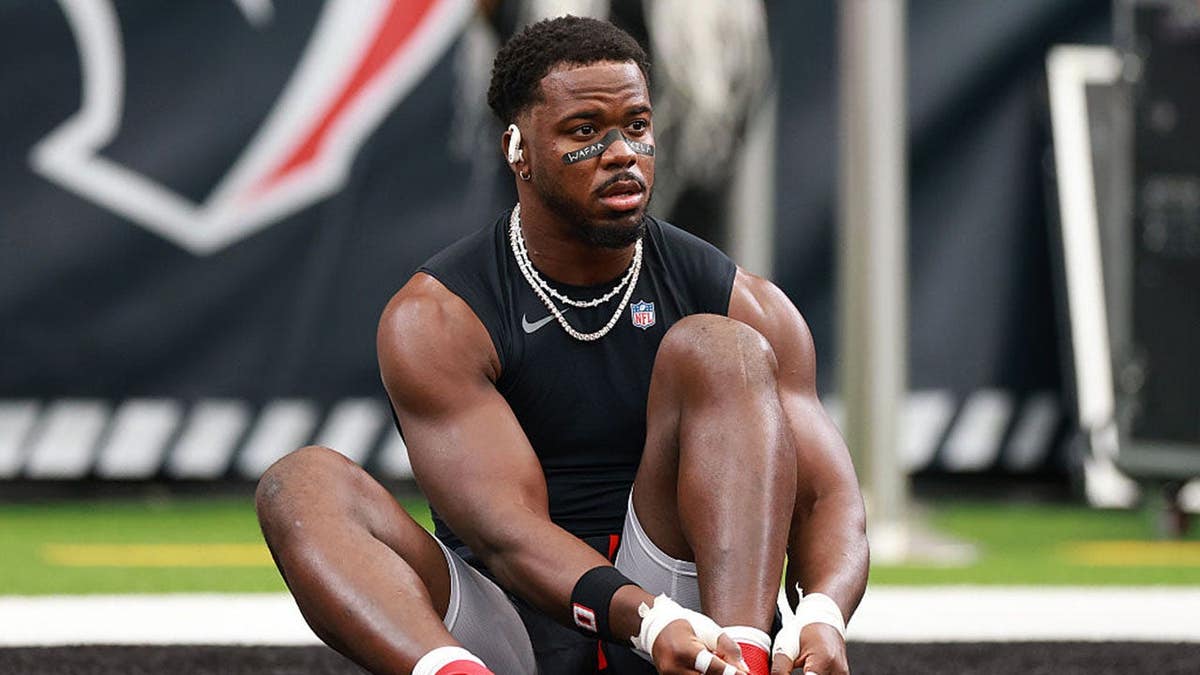
Azeez al-Shaair No. 0 of the Houston Texans warms up before a game against the Cincinnati Bengals at NRG Stadium on Sept. 20, 2026, in Houston, Texas. (Getty Images)
When asked whether Al-Shaair should receive the same protection he is seeking for Clark, Brewer initially distinguished between expressions of faith and political statements. But he ultimately said the NFL must apply its restrictions consistently, particularly while promoting league-approved social messages.
“I think he should be just as protected,” Brewer said of Al-Shaair. “If you’re going to pull down the messaging, pull it all down, but don’t pick and choose.”
The NFL has continued to display league-approved social justice messages in stadium end zones and on players’ helmets. Teams have been permitted to select from phrases including “End Racism,” “Stop Hate,” “Choose Love” and “Inspire Change,” while the league has also promoted LGBTQ inclusion through team and league initiatives.
Brewer contended that the difference between league-selected messages and unauthorized player expression creates a double standard.
“You cannot treat people differently based upon whatever it is you want to promote,” Brewer said. “If you are an organization like the National Football League, you cannot pick and choose the messaging that you want your players to play underneath.”
THE CRAIG CARTON SHOW–UNFILTERED, UNAPOLOGETIC AND UNMISSABLE. DOWNLOAD HIS DAILY PODCAST NOW!
Brewer said his immediate objective is to build support among current and former players and ultimately force the NFL to address the treatment of religious expression.
“I want players across the National Football League, current and former, to take a stand, to show unity on something,” he said. “As a National Football League player, you should be able to use your platform to profess the gospel, to profess your God and to write it on your eye black.”
Brewer emphasized that he would support the right of players from other faiths to seek the same accommodation.
CLICK HERE TO DOWNLOAD THE FOX NEWS APP
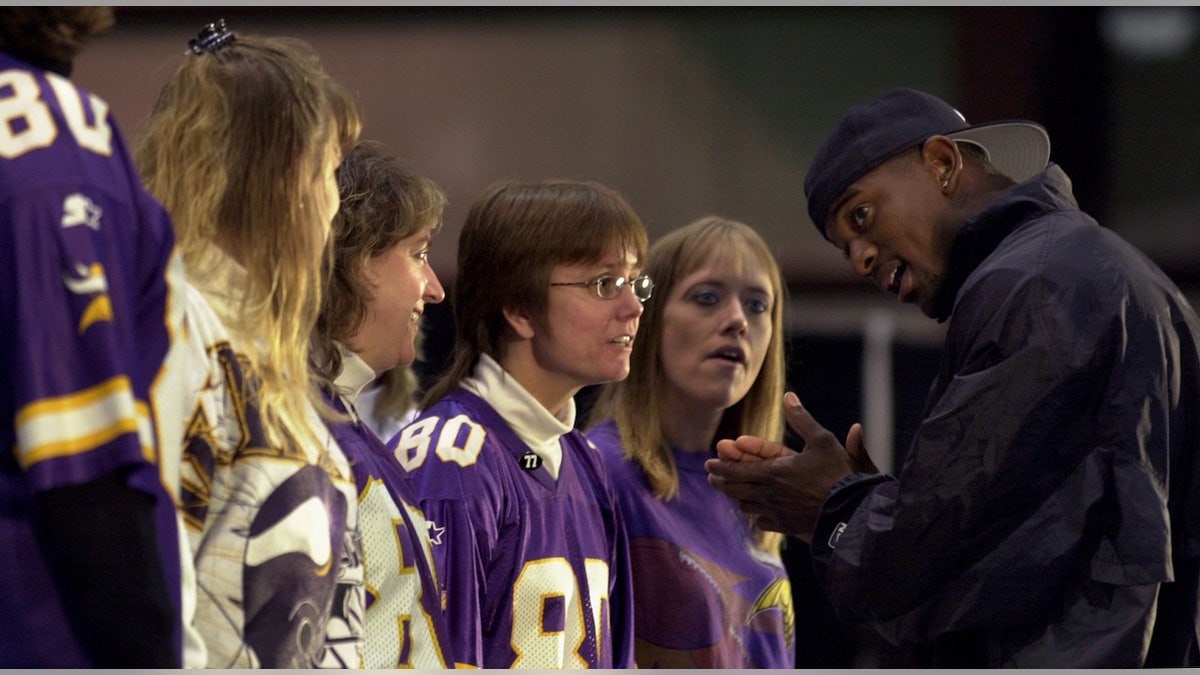
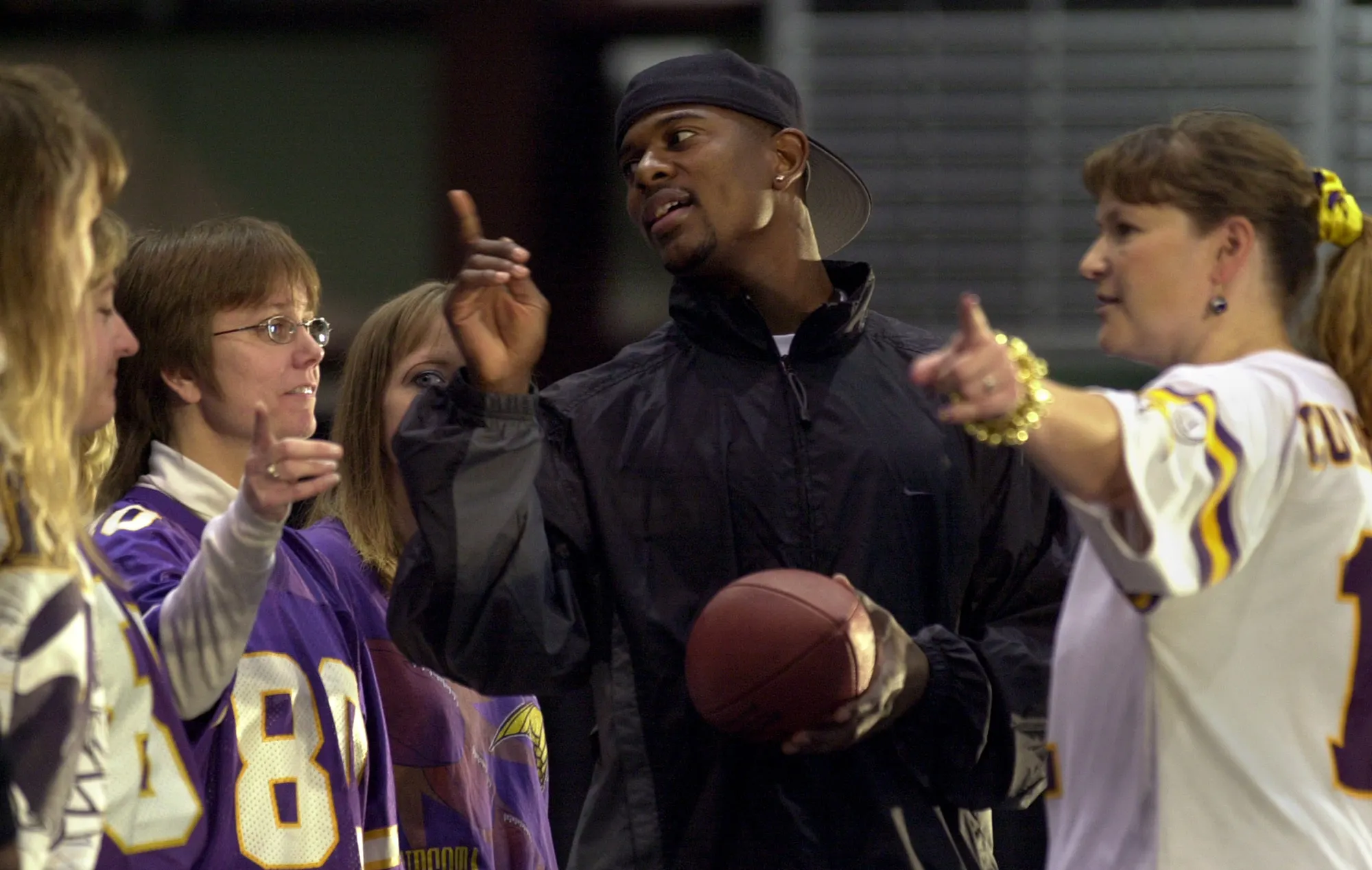
The Minnesota Vikings hosted a seminar for women at Winter Park.
IN THIS PHOTO: Eden Prairie, Mn., Sat. Oct. 12, 2002–Viking defensive back Jack Brewer (formerly a University of Minnesota defensive back) worked with a group of audience volunteers on kickoff mechanics. Brewer appeared with special teams coach Jay Hayes and the two took a team of women through a kickoff exercise. (From left to right are Katie Ruberto, Kristi Baer, Laurie Stark, Karolynn Olson and Brenda Palmer.) (Getty Images)
“I don’t care what religion you are,” Brewer said. “If you want to have the Star of David on, or you want to say, ‘Thank you, Allah,’ you have every right to do that in this country. That’s what makes this country so great.”
The NFL has not responded to request for comment.