
Heart attack deaths rising among young Americans
Fox News senior medical analyst Dr. Marc Siegel joins ‘America’s Newsroom’ to discuss a dramatic increase in fatal heart attacks among people under the age of 55 and how to keep the heart healthy.
NEWYou can now listen to Fox News articles!
A high-school student-athlete with a potentially life-threatening heart defect had no symptoms and only learned of his condition through a screening required by Florida law.
The state’s Second Chance Act went into effect July 1 ahead of the 2026-2027 school year and requires students in grades 9 through 12 to undergo at least one electrocardiogram (ECG) screening the first time they participate in or try out for interscholastic athletics, with certain exceptions, affiliate FOX 13 Tampa Bay reported.
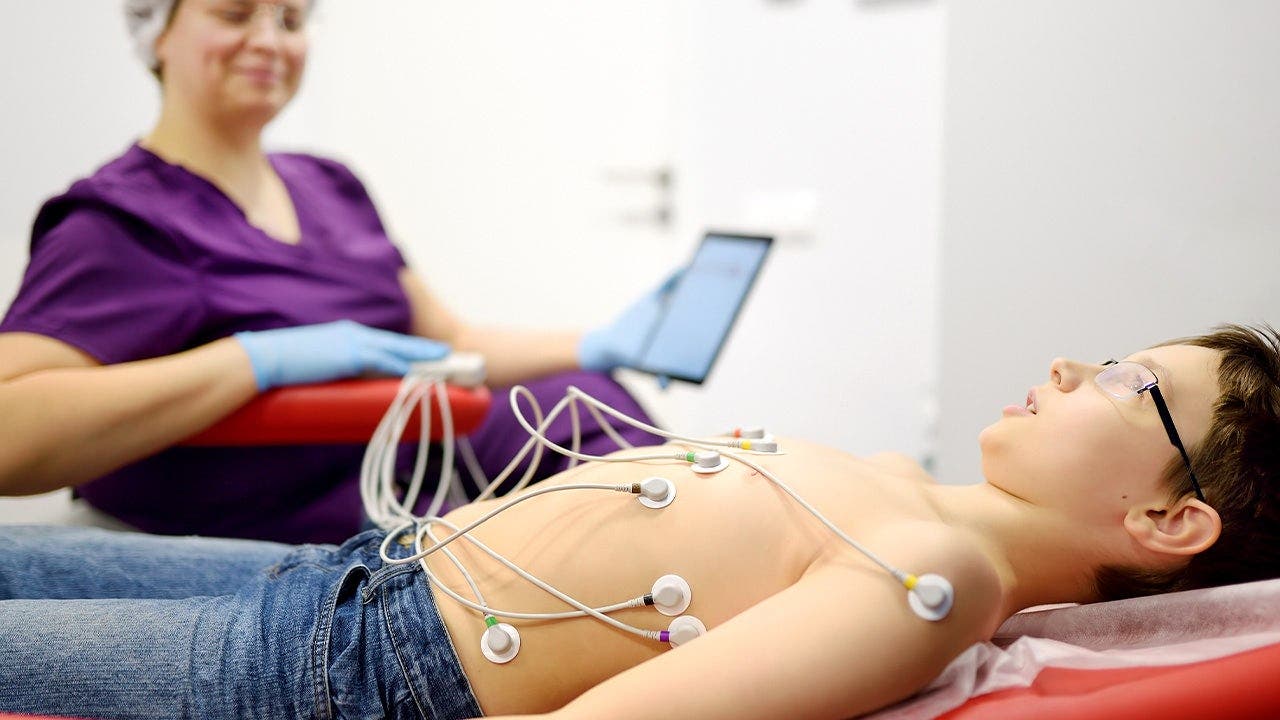
An ECG, also called an EKG, is a simple, noninvasive test that measures the heart’s electrical signals and can help identify irregular rhythms or other signs of heart trouble.
ECG screenings can help detect signs of heart conditions that may otherwise go unnoticed in young athletes. (iStock)
DIABETES DRUG COULD SLASH RISK OF FATAL HEART CONDITION IN ONE GROUP, SCIENTISTS REVEAL
For Cameron Crider, a sophomore football and basketball player at Calvary Christian High School in Clearwater — which requires ECGs for all student athletes, the screening led doctors to discover an atrial septal defect (ASD), a congenital heart defect involving an opening in the wall between the heart’s two upper chambers.
If a significant ASD is left untreated, the extra blood flow can strain the heart and lungs over time and may lead to complications such as pulmonary hypertension (high blood pressure), heart failure, and, in some cases, stroke.
“I’ve been playing [sports] my whole life and didn’t notice anything, so I was surprised because I haven’t felt anything,” Cameron told FOX 13.
“[Cam was] going to a three-hour football practice and then a two-hour basketball practice back-to-back, and never having fatigue or shortness of breath, or, you know, anything that you would think would be a warning sign,” his mother, Laura Crider, told the station. “So, we were completely shocked.”
CLICK HERE TO SIGN UP FOR OUR LIFESTYLE NEWSLETTER
Crider is scheduled for surgery to fix the ASD in October and is expected to be able to play sports again next season.
The mandatory ECG is “a gift from God that has been given to us, truly,” Laura Crider said.
“We were able to find this out in a doctor’s office with an explanation and a clear plan that says we can help you, and so many of these other parents who are advocating for these screenings, they had to find out through a tragedy,” she continued.
Up to 80% of young athletes who suffer sudden cardiac arrest (SCA) — the leading cause of death during exercise — don’t have any warning symptoms prior to their arrest, Dr. Jonathan Drezner, MD, director of the University of Washington Medicine Center for Sports Cardiology, told Fox News Digital.

Heart screenings are one tool doctors can use to assess athletes for conditions that could put them at risk. (iStock)
Because intense physical activity places additional stress on the heart, undetected heart conditions can become dangerous during sports, the American Heart Association (AHA) told Fox News Digital.
“Sudden cardiac arrest is not the only concern,” the AHA said. “These conditions can also lead to other serious heart-related complications and may require monitoring, treatment, or restrictions on athletic participation to keep students safe.”
CLICK HERE TO DOWNLOAD THE FOX NEWS APP
The AHA does not currently recommend mandatory EKG screenings for every student athlete.
“A heart assessment that includes a review of a student’s personal and family history along with a physical examination is the best way to identify serious heart conditions that can lead to cardiac events in student athletes,” the AHA said. “If the comprehensive heart assessment raises concerns, health care professionals can order appropriate follow-up testing, such as an ECG, echocardiogram, heart monitor or other advanced imaging based on the suspected diagnosis.”

A student-athlete’s heart evaluation may include a medical history, physical exam and, when appropriate, additional cardiac testing. (iStock)
The AHA and American College of Cardiology support what they say is an “evidence-based, layered approach to identify heart issues so they can be diagnosed, monitored and treated as early as possible.”
According to Drezner, an ECG screening, when interpreted properly, is one of the best screening tools in medicine.
CLICK HERE FOR MORE LIFESTYLE NEWS
“An ECG greatly increases our ability to detect conditions associated with SCA in the young,” he said. “A standard sports physical by history and physical alone will miss 80-90% of kids with at-risk heart conditions. An ECG can suggest or detect about 80 percent of the conditions that put young persons at risk. It is not perfect, but it is far better than the standard sports physical.”

Young athletes may appear healthy and perform normally even when an underlying heart condition is present. (iStock)
Though healthy athletes and young people can have a potentially lethal heart condition and not know it, Drezner said chest pain, passing out and a racing heart are symptoms that should not be ignored.
TEST YOURSELF WITH OUR LATEST LIFESTYLE QUIZ
“Make sure your child feels well when they exercise,” he advised. “If you have a family history of genetic heart conditions or SCA, you should bring this up with your child’s doctor. And get your child a proper heart screen with an ECG.”