
NEWYou can now listen to Fox News articles!
The Supreme Court will soon hear oral arguments in a case out of Alaska that centers around an airplane, a six pack of beer, and an amendment to the Constitution that traces its history back centuries as a legal expert lays out the potential impact of the ruling to Fox News Digital.
“Excessive bail shall not be required, nor excessive fines imposed, nor cruel and unusual punishments inflicted,” the 8th Amendment to the U.S. Constitution reads.
That amendment is at the heart of a case that will be heard by the Supreme Court in December and Cully Stimson, a senior legal fellow at Heritage Foundation, described it as “the case that libertarians and freedom-minded people have been hoping for for years.”
Kenneth Jouppi, now 82, was operating a one-man air taxi service using his personally-owned 1969 Cessna plane in 2012 when Alaska state troopers executed a search warrant on his plane and found alcohol on board, including one six-pack that they said was plainly visible. At the time, Jouppi was on a runway in Fairbanks preparing to take a customer and her groceries to the remote village of Beaver near the center of the state.
SUPREME COURT REJECTS MICHIGAN FAMILY’S CLAIM THAT COUNTY COMMITTED ‘HOME EQUITY THEFT’ OVER $2,200 TAX DEBT
The Institute for Justice is helping Kenneth Jouppi petition the U.S. Supreme Court. (Kenneth Jouppi/Institute for Justice)
Having beer on board wasn’t illegal on its own and Jouppi says he was not aware the woman had the beer with her. However, since Beaver had banned the possession or sale of alcohol within its limits, Jouppi was convicted of alcohol importation, a misdemeanor. The Alaska Supreme Court held that, under the alcohol importation ban, the state was required to confiscate Jouppi’s Cessna.
Jouppi has since argued in court that the state’s seizure of his plane, valued at $95,000, runs afoul of the 8th Amendment’s ban on excessive fines. Now, the Supreme Court will weigh in on whether he’s right.
“Taking a guy’s airplane, livelihood because he tried to take a six-pack of beer into a dry village, I mean can there be a more outrageous abuse of the excessive fines clause?” Stimson said. “I don’t think so. So honestly, in a perfect world, it should be 9-0 for Mr. Jouppi.”
Stimson says the idea that governments should not be able to devastate citizens with fines dates back centuries to the Magna Carta, the 1215 English charter that limited the king’s power and established the principle that rulers are subject to the law, and explained in a recent Daily Signal article that prohibition on excessive fines is backed by “8 centuries of proportionality.”
THE FBI TOOK A WOMAN’S LIFE SAVINGS, BUT A NEW BILL WOULD END THE ‘LAWLESS’ SEIZURE OF AMERICANS’ PROPERTY
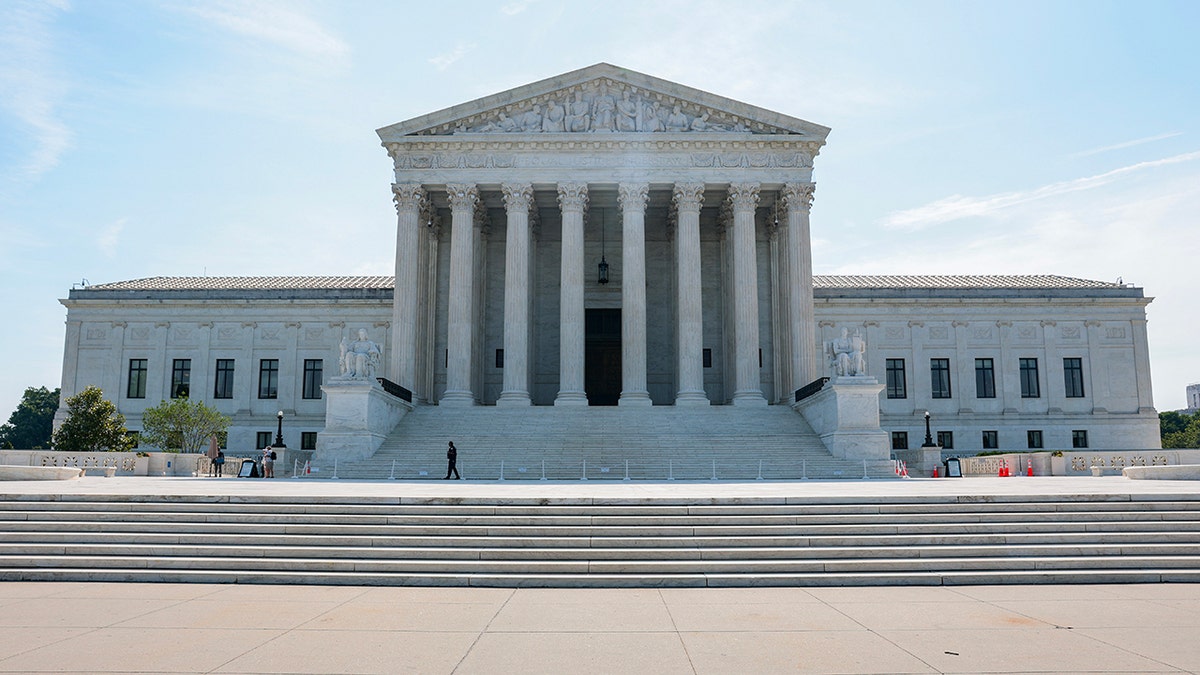
An exterior view of the Supreme Court Building on June 22, 2026 in Washington, D.C. (Anna Moneymaker/Getty Images)
At the center of the case, Stimson explained, is whether Alaska’s forfeiture of Jouppi’s roughly $95,000 airplane was proportionate to his misdemeanor conviction for bringing a six-pack of beer into a dry village.
Alaska argues the plane was worth less than 10 times the maximum possible fine of $10,000, while Jouppi’s attorneys point to the sentence he actually received: the minimum $1,500 fine and three days in jail. The Supreme Court will consider whether proportionality should be measured against the maximum penalty allowed by law or the specific punishment imposed in Jouppi’s case.
“Alaska’s Brief spends a lot of ink on the purpose of these local rules that create dry cities,” Stimson said. “They spend a lot of ink on alcoholism in Alaska and all the rest of it. All of that’s irrelevant. If it was that important, they would have made it a felony and they would have made it a really serious felony with a lot of jail time and a huge forfeiture. They made it a misdemeanor. He was convicted of a misdemeanor and he got three days in jail.”
Stimson pointed to the trial judge in the case who refused to take Jouppi’s plane in the first place and said that was the correct decision.
LIBERAL JUSTICE HAMMERS SUPREME COURT FOR FAST-TRACKING EMERGENCY DOCKET CASES

Alaska bush pilot Kenneth Jouppi appeals to U.S. Supreme Court after state seized his $95,000 aircraft for unknowingly transporting beer to dry village. (Kenneth Jouppi/Institute for Justice)
“The state appealed that, it came back to the judge on remand from the Court of Appeals and the judge said, I find that the request by the state is a violation of the Eighth Amendment’s excessive fines clause,” Stimson said.
“The state appealed again. It went to the Court of Appeals, and then went to the Alaska Supreme Court,” Stimson explained. “So even the trial judge, when he had two bites of the apple, refused to take the plane and I think you really have to give credit to that trial judge, who was in the courtroom, who understood that this was almost a 90-year-old man, who was an Air Force veteran, whose only job and means of income besides Social Security was flying this plane to villages as a taxi cab driver, essentially. And so, if the government can do that, the state or federal government can take your means of livelihood away from you for a misdemeanor, we’re in deep, deep trouble as a country.”
When ruling on Jouppi’s case, the court will have the opportunity to seriously rein in the ability of state and local governments to impose asset forfeiture, a longtime goal of civil libertarians, which has been an issue for decades in the United States as Americans have pushed back on excessive fines and seizures from government agencies.
CLICK HERE TO DOWNLOAD THE FOX NEWS APP
Stimson told Fox News Digital the Supreme Court has only ruled on the excessive fines clause five times and has “never really laid out exactly what constitutes an excessive fine.” He touted the significance this ruling could have and pointed to the amicus brief in the case filed by the Buckeye Institute in Ohio as something that “really stood out to me”
“They talk about all the incentives built into the system that can be and are abused by law enforcement when they arrest you for this crime and they take all of this of yours over here, or they arrest you for this little tiny crime and then they take this,” Stimson said. “And of course, when they take it, the proceeds of that benefit the law enforcement agency and pay for their extra weapons, their cars, their new buildings, their uniforms, and the rest of it. So the incentives are misaligned. And so I think the court hopefully will, number one, just for legal nerds like me, answer what the parameters are of evaluating excessive fines claims under the Eighth Amendment. But two, write it in a way that disincentivizes law enforcement. From overreaching and abusing their authority that they currently enjoy.”
Fox News Digital’s Robert Schmad contributed to this report